
CENTURI Training course
Data Weeks Part 3 — Concepts and Methods for Computational Spatial Biology
This course is the third part of the Data Weeks course.
Spatial technologies such as advanced microscopy imaging techniques and spatial multi-omics (genomic, transcriptomic, proteomic, …) have revolutionized the resolution and richness of measurements of biological tissues. These technological developments lead to spatial multivariate data, for example individual cell features and their spatial relationships.
In this class, after reviewing the main technologies and the type of spatial data they generate, we will address the concepts and methods underlying their analysis. In particular, we will focus on unsupervised data exploration strategies that exploit the spatial component, such as spatial statistics, network-based approaches or spatially-aware clustering methods. We will finally show how these methods can be relevant to extract spatial patterns of cell morphology or gene expression, and compare them across multiple conditions.
The hands-on session in the afternoon will provide an opportunity to work on spatial morphometrics and spatial transcriptomics data.
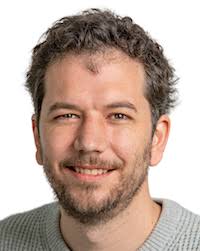
About the Trainer —
Paul Villoutreix holds an INSERM Junior Professor Chair and leads a group at the Marseille Medical Genetics institute. Trained as an engineer in applied mathematics at Supélec, he later pursued an interdisciplinary master's in life sciences before completing a PhD on randomness in animal morphogenesis, under the mentorship of Nadine Peyriéras and Giuseppe Longo. He joined CENTURI in 2019 to start his group, focusing on machine learning methods to extract biological insights from large-scale imaging and sequencing datasets — in particular, exploring the mapping between the high-dimensional geometry of gene expression and the physical geometry of living tissue. His work sits at the crossroads of developmental biology, computer science, and applied mathematics.
From an engineering degree to leading a machine-learning team decoding how embryos take shape